The problem no one had solved
UNICEF's Centre of Excellence was sitting on some of the world's most rigorous climate data and still couldn't move from insight to action fast enough. Each Climate Country Proposal required a team of specialist consultants, $100 to $150k per country, and 24 months to cover six geographies.
The gap wasn't information. It wasn't expertise. It was the machinery to translate risk into operational decisions across sectors and geographies, without rebuilding from zero every single time.
The data existed. The decision-ready layer didn't.
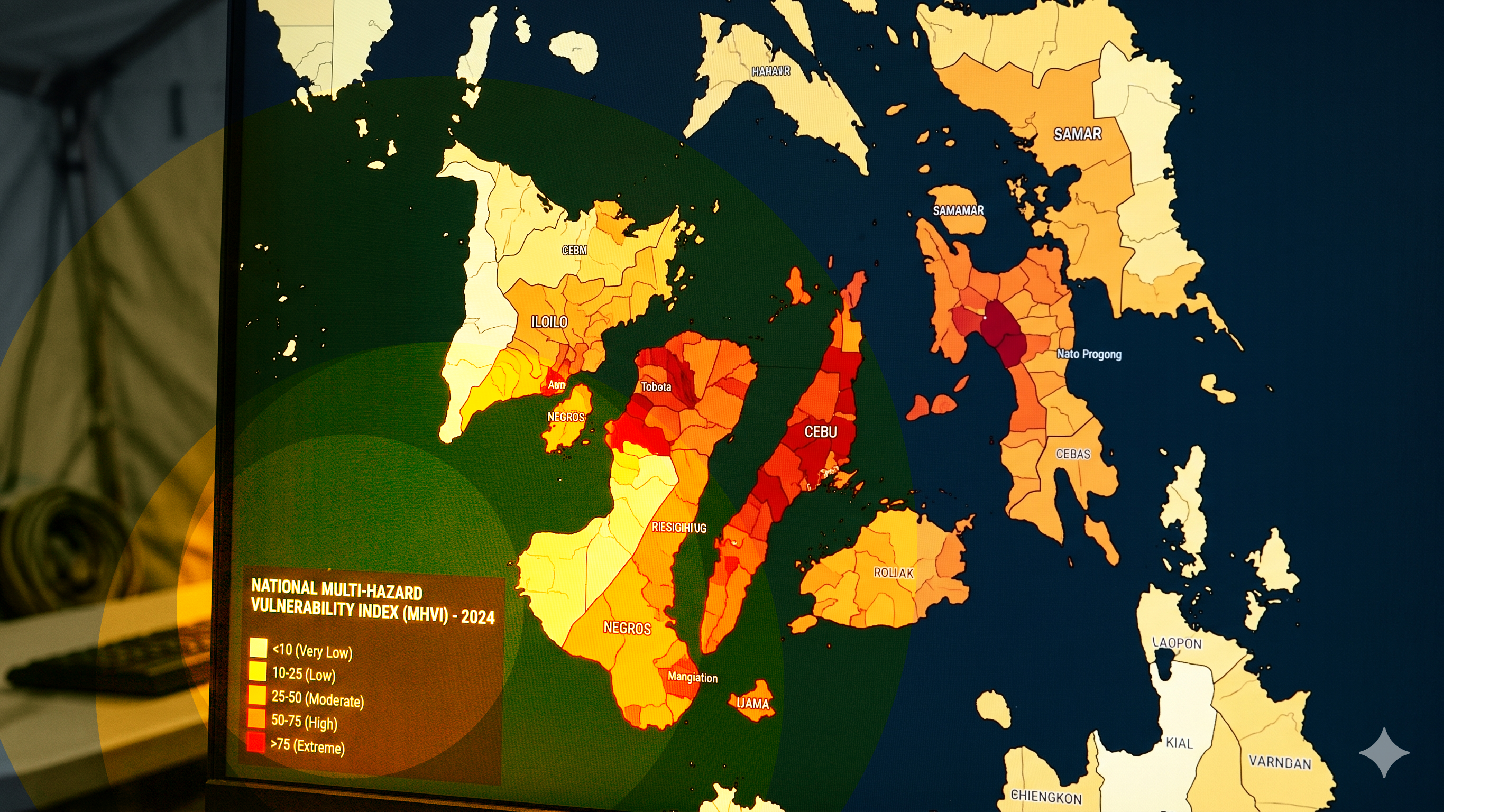
 Hotspot heatmap: hazard × vulnerability index
What Verdera built
We decomposed the proposal process into its smallest working units — discrete lego blocks, each with a specified input and output, each independently executable. Three modules combined to cover the full scope of a Climate Country Proposal.
Hotspot Analysis mapped every climate hazard at ADM3 resolution, homogenised them into a single risk indicator, and layered in child vulnerability across health, education, sanitation, and livelihoods to produce a high-resolution risk map of every programme area in scope.
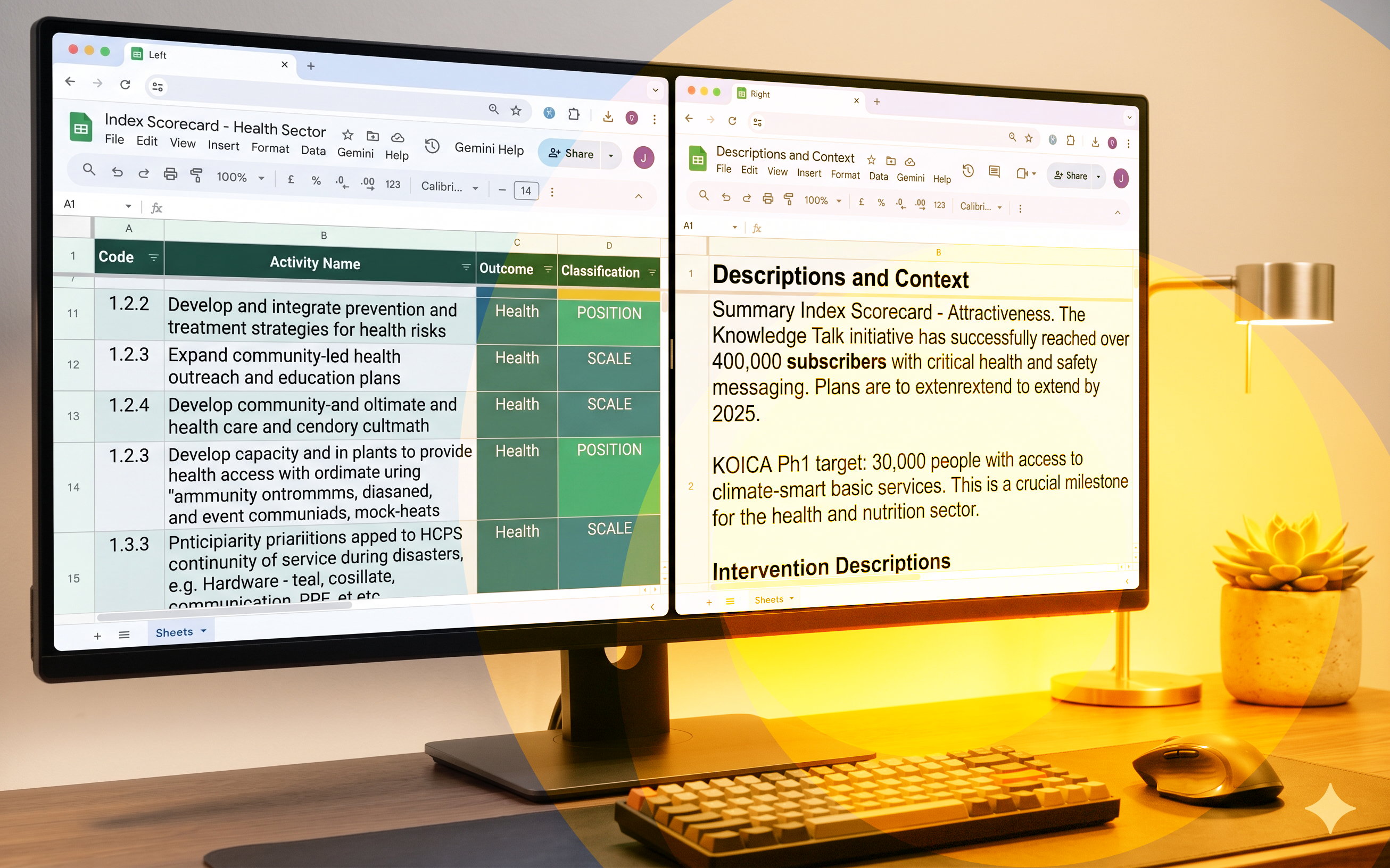
Intervention Assessment used a proprietary Attractiveness Index to rank every available intervention against the specific country context. Not a generic shortlist, but a ranked set calibrated to the risks and vulnerabilities already identified.
Budget and Impact Modelling allocated resources across interventions to maximise outcomes across multiple axes: direct and indirect beneficiaries, donor requirements, and sector-specific targets. Every number tied to its source.
Traceable reasoning. Every output tied to a source. Nothing generic.
 Judgement Engine output: intervention ranking and budget allocation
Why it didn't end there
The follow-on contract wasn't a courtesy. It was the system working as designed. When you embed Verdera inside a client's workflow — not as a report delivered once, but as live infrastructure — the questions get more specific, the feedback loops get tighter, and the value compounds.
Three months into the pilot, UNICEF came back. The same lego blocks that powered the first six countries are now configured for the next cohort: faster, with a higher baseline, and with institutional memory that no consultant ever left behind.
Not a pilot. Not a report. A system that got more useful the longer it ran.